




What are high-yield bonds?
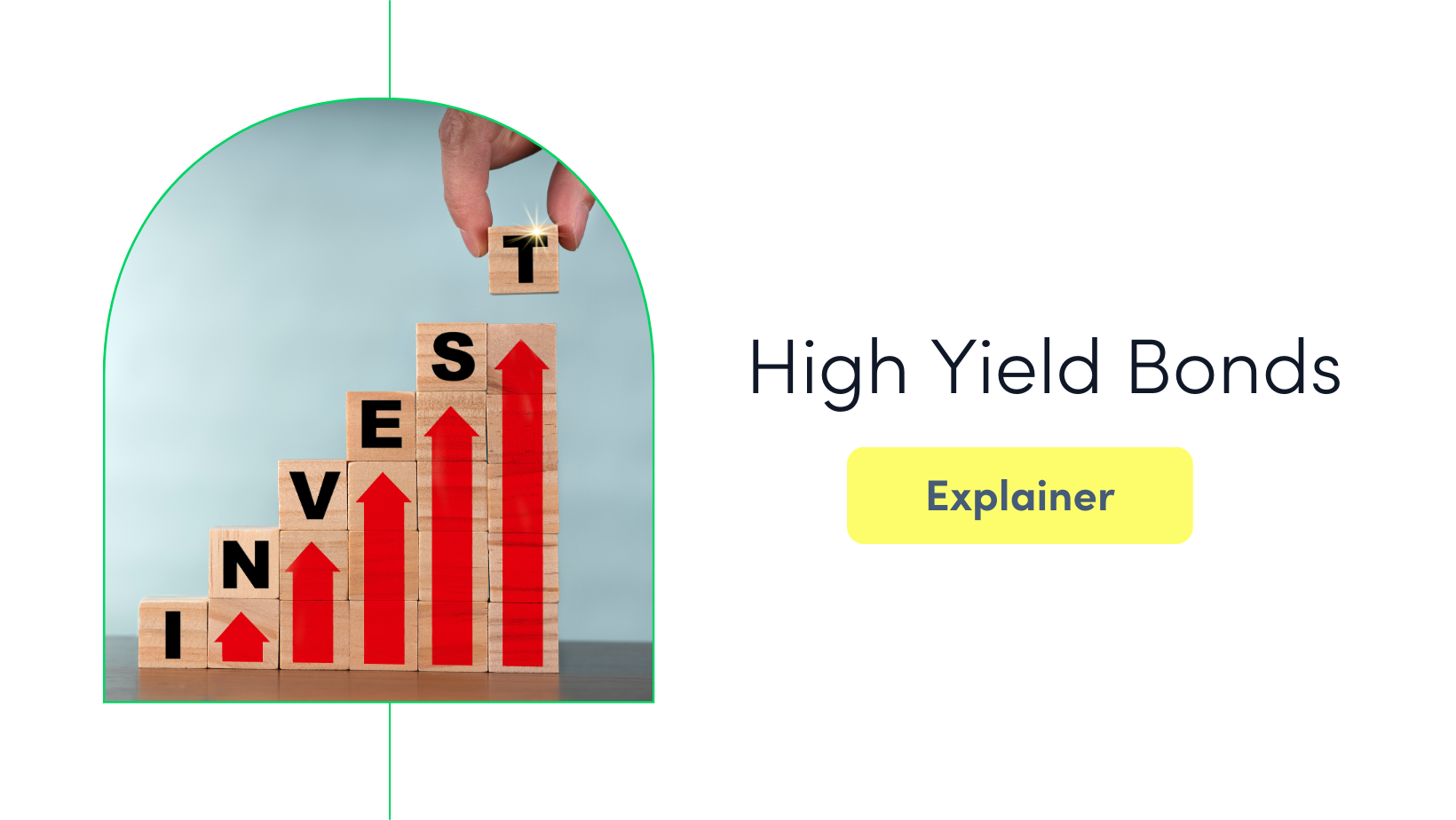
High yield bonds are issued by companies with below-investment-grade credit ratings. These bonds have a higher risk of default than investment-grade bonds, but they offer a higher return to compensate for the additional risk. Companies issue high-yield bonds to raise capital for various purposes, such as funding mergers and acquisitions or financing expansion projects.
High yield bonds are usually issued by companies that have a higher level of debt or have a more volatile business model. As a result, they are considered riskier investments than investment-grade bonds, which are issued by companies with higher credit ratings.
How do high-yield bonds work?
High yield bonds work similarly to other types of bonds. When you invest in a high-yield bond, you are essentially loaning money to the company that issued the bond. The company pays interest on the bond, and at the end of the bond’s term, the company pays back the principal amount.
The interest rate on high-yield bonds is typically higher than investment-grade bonds to compensate investors for the higher risk of default.
Benefits of investing in high-yield bonds
1. One of the primary benefits of investing in high-yield bonds is the higher return compared to investment-grade bonds. The additional return can help boost your portfolio’s overall performance, especially in a low-interest-rate environment. The interest payments on high-yield bonds are usually higher than investment-grade bonds, making them an attractive option for income-seeking investors.
2. Secondly, high yield bonds can offer diversification benefits as they tend to have a low correlation with other asset classes like government and investment-grade bonds. By adding high-yield bonds to a portfolio, investors can reduce the portfolio’s overall risk and increase its potential returns.
3. Thirdly, high yield bonds can offer capital appreciation opportunities if the issuing business performs better or if the economic growth improves. This may be due to factors such as improved fiscal earnings, upgraded ratings, mergers, acquisitions, significant managerial changes, or better product development. When these events happen, the company’s financial position and bond ratings can improve, leading to an increase in the bond’s par value and capital gains for investors. Capital gains from high-yield bonds can be significant if the issuer follows through on their terms.
Risks of investing in high-yield bonds
Investing in high yield bonds does come with higher risks than investment-grade bonds. One of the primary risks of high yield bonds is the risk of default. Because companies issue these bonds with lower credit ratings, they have a higher probability of defaulting on their payments. If a company defaults on its bond payments, bondholders risk losing some or all of their investment.
High yield bonds are also more volatile than investment-grade bonds, which makes them more susceptible to changes in the market. In times of economic downturn, the coupon rate and face value of high-yield bonds can be affected, potentially leading to a decrease in the bond’s value.
This volatility can also make it difficult to predict the future performance of high-yield bonds.
How to invest in high-yield bonds in India
There are several ways retail investors in India can invest in high-yield bonds. Investing in high-yield bond mutual funds or exchange-traded funds (ETFs) is one way. These funds invest in a diversified portfolio of high-yield bonds, which can help reduce the risk of investing in a single bond.
Another way to invest in high-yield bonds is to purchase individual bonds directly from a broker or dealer. However, investing in individual bonds requires more research and due diligence than investing in mutual funds or ETFs.
Conclusion
Investing in high-yield bonds can be an attractive option for retail investors in India looking to generate higher returns on their investments. However, high-yield bonds come with higher risks than investment-grade bonds, and investors should carefully consider these risks before investing.
Frequently Asked Questions
What are the key takeaways from this article?
High yield bonds are issued by companies with below-investment-grade credit ratings. These bonds have a higher risk of default than investment-grade bonds, but they offer a higher return to compensate for the additional risk. Companies issue high-yield bonds to raise capital for various purposes, such as funding mergers and acquisitions or financing expansion projects.
Who should read this article?
This article is designed for retail investors, first-time bond buyers, and anyone looking to understand fixed income investments in India.
How does this relate to my investment portfolio?
Understanding these concepts helps you make informed decisions about asset allocation and build a diversified investment portfolio.